

Safe Mkhukhu: Communities Co-Designing Safer Homes for Children
The Child Health and Mortality Prevention Surveillance (CHAMPS) South Africa site is locally led by the University of the Witwatersrand Vaccines and Infectious Diseases Analytics Research Unit (Wits VIDA). CHAMPS South Africa is pioneering a community-centred approach to preventing childhood injuries through the Safe Mkhukhu Project, an innovative initiative that empowers caregivers to design practical, affordable, and sustainable safety solutions for children living in informal settlements. CHAMPS surveillance has highlighted that up to 43 % of the underlying cause of death in children aged 1-5 years old is due to preventable childhood injuries that often occur at home.
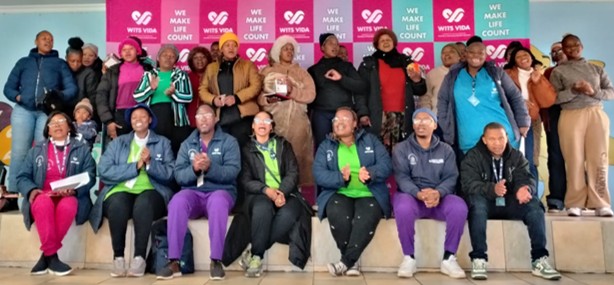
In Thembelihle, Gauteng, CHAMPS South Africa, in collaboration with the Wits School of Civil and Environmental Engineering, Surgeons for Little Lives (SFLL), and the University of Oxford, hosted a three-day Community Co-Design Workshop with 20 caregivers of children under five years of age. This collaborative workshop formed the crucial first step in the development of the Safe Mkhukhu Project, which aims to reduce preventable childhood injuries in informal settlements like Thembelihle. Rather than developing solutions for communities, the workshop recognised caregivers as experts in their own environments and worked alongside them to co-create interventions that address the realities of their everyday life.
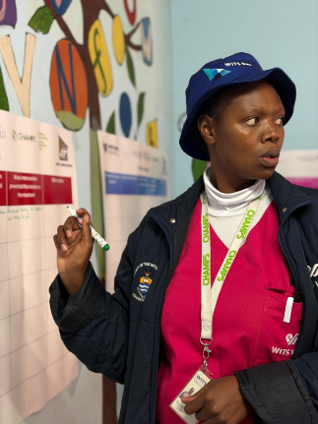
Guided by participants lived experiences, caregivers identified burns, poisoning, drowning, and electrocution as the leading preventable childhood injury risks within their homes. Participants alongside the CHAMPS field workers, qualitative and data-to action teams and Wits School of Civil and Environmental Engineering/Faculty of Engineering and the Built Environment (SCEE/FEBE) team engaged in hazard mapping, injury prevention prioritization, story sharing, and identifying prevention through CHAMPS data. The process of awareness, prioritization and hazard mapping led to the creation of 19 spatial redesign blueprints and 19 micro-intervention designs to mitigate injury risks. By prioritizing community-led innovation, the initiative sought to develop practical interventions tailored to the specific challenges of informal housing. A key focus of the workshop was to incorporate the use of recycled or cheap materials identified as available within the community.
Together, they designed innovative, low-cost interventions using recycled and locally available materials, including child-proof storage units for hazardous substances, electrical socket covers, protective barriers, safer water storage solutions (drowning and hot water burns), and redesigned household layouts that separate children’s play areas from potential hazards, importantly burn risks.
The workshop also demonstrated measurable improvements in caregivers’ awareness of risks, confidence in identifying risk areas and devising solutions to avert injuries. Following the intervention, significantly more participants felt confident identifying household hazards, recognised that simple home modifications could improve child safety, and committed to implementing the practical solutions developed during the workshop. Remarkably, 100% of participants reported that they intended to implement the co-designed interventions in their own homes, highlighting strong community ownership and the potential for sustainable behaviour change.
The Safe Mkhukhu Project demonstrates the power of combining evidence and health education with community knowledge to transform research into action. By harnessing local creativity and promoting affordable, context-specific solutions, CHAMPS South Africa is helping to build safer home environments for children while laying the foundation for future pilot interventions that can be evaluated and scaled in similar low-resource settings.
As the project progresses, the co-designed prototypes will be refined, pilot-tested, and evaluated, contributing to CHAMPS’ broader mission of generating evidence that saves children’s lives through community-driven, data-informed action.



 Wits VIDA is proudly celebrating the 30th year of transforming global public health through innovation, collaboration and research. We invite you to be part of this experience with us as we reach a significant milestone in our journey to produce impactful change that affect the lives of thousands.