

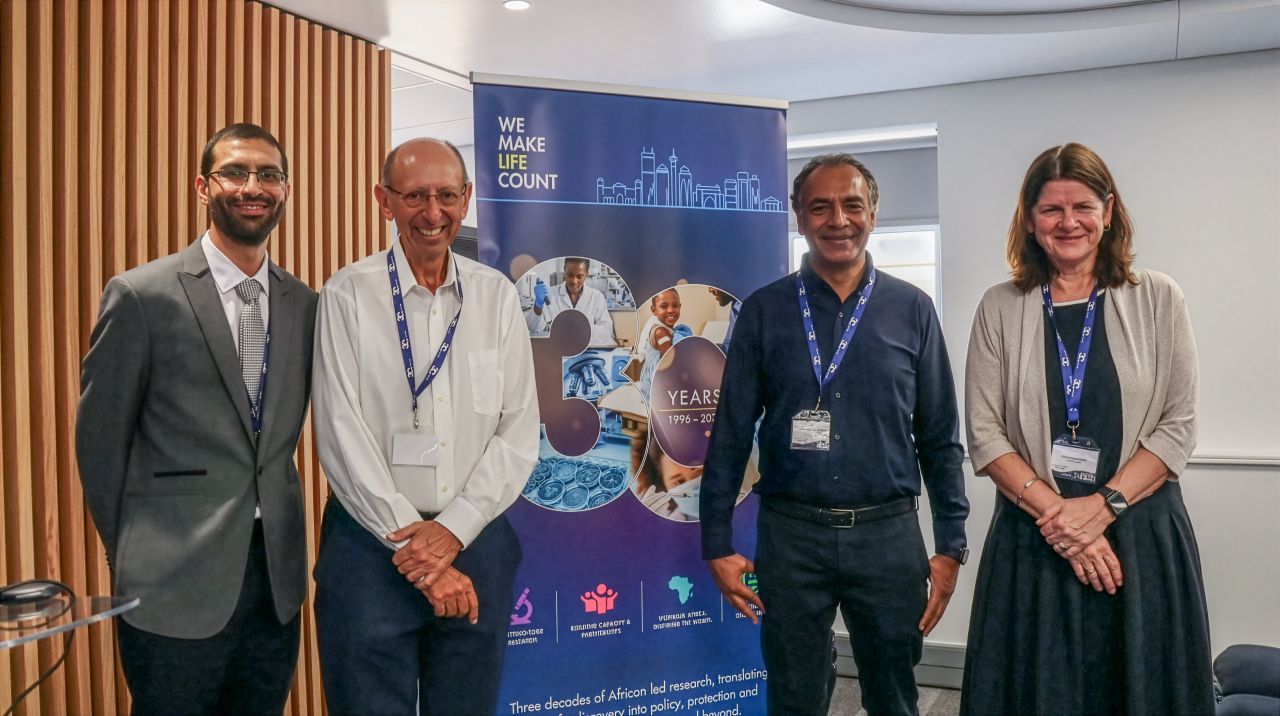
Wits VIDA marks 30 years of making life count with bold vision for the future of vaccine development
Academic Day celebrates three decades of vaccine research, public health impact and scientific leadership while looking towards an end-to-end vaccine development offering
Johannesburg, South Africa – The Wits Vaccines & Infectious Diseases Analytics Research Unit (Wits VIDA) today marked 30 years of vaccine research, innovation and public health impact with a special Academic Day at the Wits BioHub in Johannesburg.
Held under the theme “Shaping the future of public health,” the Academic Day brought together leading scientists, researchers and emerging researchers to reflect on Wits VIDA’s three-decade journey and explore the future of vaccine research and development. The milestone celebration also provided an opportunity to reflect on how Wits VIDA has evolved from its origins as the Pneumococcal Diseases Research Unit into a broad research platform spanning clinical research, epidemiology, vaccine evaluation and vaccine development.
The occasion brought together researchers, clinicians, partners, alumni, and supporters to reflect on three decades of groundbreaking contributions that have advanced knowledge, strengthened healthcare, and improved lives across communities.
The programme opened with Professor Keith Klugman, who reflected on the founding of the Pneumococcal Diseases Research Unit, followed by Professor Shabir Madhi’s presentation, “Wits VIDA – Three decades of making lives count.” Professor Lynn Morris, Wits Deputy Vice-Chancellor: Research & Innovation, reflected on VIDA’s contribution to the University’s research landscape.
Celebrating three decades of scientific contribution
Reflecting on the milestone, Professor Morris, congratulated the Wits VIDA team and acknowledged the contribution of those who have helped build and sustain the unit over three decades.
“Congratulations to the team at VIDA, past and present. From my perspective, we all know what it takes to build and sustain a research unit.”
Prof Morris also highlighted the significance of celebrating the milestone at the Wits BioHub, which represents a new chapter for biomedical research at the University.
“I think it’s fitting that we are celebrating this milestone at the BioHub, as it is one that represents an exciting new chapter for biomedical research at Wits.”
From vaccine evaluation to vaccine development
Professor Shabir Madhi highlighted the breadth of Wits VIDA’s work and its contribution across different stages of vaccine research. While Wits VIDA has developed significant expertise across clinical research, epidemiology and vaccine evaluation, Madhi said the unit is now looking towards strengthening its capacity in the research and development of vaccines.
“The scope of Wits VIDA activities spans clinical, epidemiology, even the development of vaccines, and even the evaluation of the efficiency of vaccines. Showcasing the broad spectrum of activities that take place at VIDA. What is lacking, but we are now beginning to look into, is the actual R&D and development of vaccines. And we want to have an end-to-end approach to our offering on vaccines.”
This ambition represents an important next step in Wits VIDA’s evolution, connecting scientific discovery and research with vaccine development and evaluation.
GBS vaccine research offers glimpse of what is possible
One example of the potential impact of this work is Wits VIDA’s research into Group B Streptococcus (GBS), a pathogen associated with serious illness in newborn babies.
Madhi highlighted the progress made towards a potential GBS vaccine following decades of research.
“GBS has been with us since the 1970s – and 50 years later we are on the cusp of a vaccine that will hopefully be licensed.”
He pointed to findings from a Phase 2 Wits VIDA study investigating maternal vaccination and the potential transfer of protective antibodies to the foetus.
“This is based on a Phase 2 Wits VIDA study, which shows the potential of a GBS vaccine to give sufficient antibodies to the mother which will pass on to the foetus, which will then save the baby in the first months of life.”
The scale of Wits VIDA’s research over the past 15 years has also generated an important evidence base to inform this work.
“We have enrolled over 80,000 mothers and newborn babies over the last 15 years. The study results are informing the potential licensure of this important vaccine.”
Vaccines have transformed child survival
Madhi also reflected on the contribution of vaccines to global progress in reducing deaths among children under five.
“Tremendous progress has been made. In 1990, there were about 10 million children that would have died before the age of five years. In 2025, that figure has plummeted to 4.5 million children, which is less than half.”
Despite this progress, Madhi emphasised that significant challenges remain.
“That is still too many children. But vaccines have contributed to at least preventing over 40% deaths in children. Reduction in death of children under the age of five, including measles, including pneumococcal conjugate vaccine and rotavirus vaccine.”
He said there remains significant potential to prevent deaths using existing tools.
“But we won’t rest because there are still about 700,000 children under the age of five who will die due to pneumonia and other preventable diseases. So, there is massive potential to reduce death with the tools we currently have.”
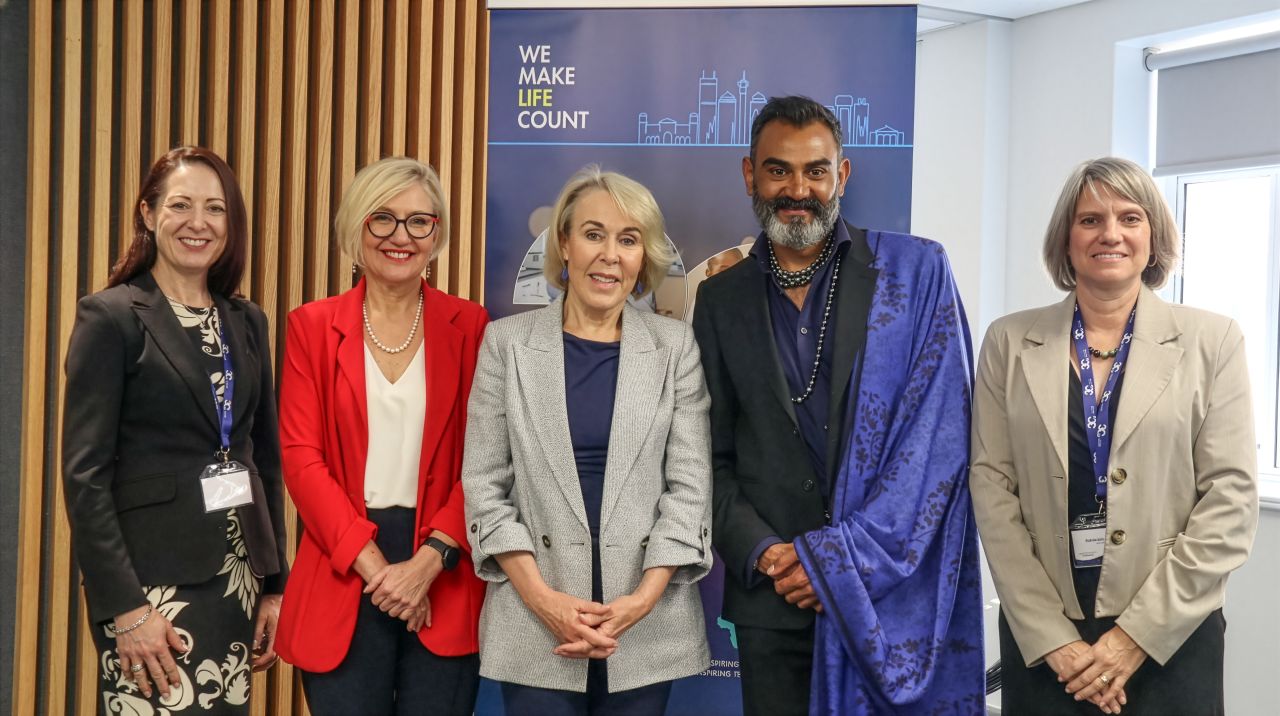
Showcasing the breadth of vaccine research at Wits
The Academic Day showcased the wide range of vaccine research taking place across Wits, including vaccine equity, respiratory pathogens, One Health, HIV vaccination, TB vaccines and monoclonal antibodies.
The Vaccine Research at Wits session featured notable presentations by Professor Helen Rees, Professor Anne von Gottberg, Professor Marietjie Venter, Professor Glenda Gray, Professor Bavesh Kana and Professor Penny Moore.
The programme then looked towards the future of vaccine development, with presentations covering mRNA vaccine development and green lipids, opportunities and challenges for the C1 platform, CMV vaccines for low- and middle-income countries, and the development of vaccines against Klebsiella pneumoniae and GBS.
Together, the presentations demonstrated the breadth of scientific work contributing to Wits VIDA’s vision for the future of vaccine research and development.
Investing in the next generation
The celebration also placed emerging researchers at the centre of Wits VIDA’s future.
The Emerging Researchers session featured Dr Denasha Reddy, Bonginkosi Shabangu, Dr Rebecca van Dorsten and Khutadzo Hlongwane, providing a platform for researchers to share their work and highlighting the importance of building research capacity.
For Wits VIDA, developing the next generation of African scientists is an essential part of ensuring that the continent continues to contribute to vaccine science and respond to its own health priorities.
Looking towards the next 30 years
Wits VIDA’s 30th anniversary is both a celebration of its scientific legacy and a statement of intent for the future. The event highlighted the power of collaboration, innovation, and a shared commitment to addressing some of society’s most pressing health challenges. From pioneering research to transformative breakthroughs, Wits VIDA’s journey stands as a testament to what is possible when science serves humanity.
The Academic Day highlighted four pillars that continue to define the unit’s ambitions: cutting-edge research, building capacity and partnerships, inspiring Africa and the world, and advancing vaccines for global health. As Wits VIDA enters its next chapter, its ambition is to build on three decades of research and partnerships while strengthening its contribution across the vaccine development continuum.
From understanding infectious diseases and evaluating vaccines to developing new vaccine candidates, the unit is positioning itself to play an increasingly important role in generating evidence and innovations that can help prevent disease and save lives.
The 30th Anniversary Academic Day closed with a vote of thanks from Professor Shabir Madhi, bringing together reflections on VIDA’s past achievements with a forward-looking vision for vaccine development in Africa. As one chapter of an extraordinary legacy is honoured, the next begins with renewed purpose, ambition, and the promise of even greater impact.
For media enquiries:
#Media Contact: [Theranne van Vuren| Nondwe Majundana, WITS VIDA | University of the Witwatersrand, theranne.vanvuren@wits-vida.org | nondwe.majundana@wits-vida.org]
About Wits Vida
We Make Life Count – An African-led Research Unit
Wits VIDA Research Unit conducts cutting-edge scientific research. Our aim is to continue to save lives across Africa and low and middle-income countries (LMIC) through translational research that informs local and global policy recommendations on infectious diseases and the use of next-generation and novel vaccines. Formerly known as the Respiratory and Meningeal Pathogens Research Unit (RMPRU) and founded in 1995, the Vaccines and Infectious Diseases Analytics (VIDA) Research Unit of the University of the Witwatersrand is an internationally recognised, African-led research unit in the field of epidemiology of vaccine preventable diseases, and clinical development of life-saving vaccines. Under the guidance of Professor Shabir Madhi, a globally recognised leader in the field of paediatric infectious diseases and the Dean of the Faculty of Health Sciences at the Wits University, Wits VIDA is conducting translational research on vaccine preventable diseases and training the next generation of clinician scientists.
ENDS



 Wits VIDA is proudly celebrating the 30th year of transforming global public health through innovation, collaboration and research. We invite you to be part of this experience with us as we reach a significant milestone in our journey to produce impactful change that affect the lives of thousands.